Scaphoid and lunate fractures most commonly affect young patients between the ages of 20 and 25. If not treated with an appropriate surgical procedure, they can lead to severe wrist arthritis and loss of function, says Dr Heinz Buerger from Klagenfurt.
A bone measuring just one centimetre, a blood vessel only half a millimetre wide, and an operation in which circulation is restored under a microscope, effectively bringing the bone back to life. It may sound extremely complex, but this is precisely how some of the most serious consequences of fractures involving the small bones of the hand and wrist can be treated. The surgeon takes a small piece of bone with its own blood supply from the knee and transfers it to the wrist, where it replaces damaged or necrotic bone. This can help prevent serious consequences of scaphoid and lunate fractures which, in severe cases, may lead to a complete loss of wrist function.
Hand Microsurgery: Millimetre Precision That Restores Blood Flow
The procedure involves an innovative technique using a vascularised bone graft to treat osteonecrosis of the small bones of the hand and wrist. Dr Heinz Buerger from Klagenfurt, one of the world’s leading experts in microsurgery, has been developing and refining this method for 23 years and has performed almost 1,800 such complex procedures.
In applying this demanding technique, he has collaborated on several occasions with renowned plastic surgeon Prof. Milomir Ninković, MD, PhD from the Priora International Medical Center in Čepin, near Osijek, during the period when Professor Ninković lived and worked in Germany. When the two surgeons work together in the operating theatre, their roles are precisely divided: one team works on the knee, while the other works on the hand. They then come together at the most delicate stage of the procedure – when blood vessels measuring only around half a millimetre in diameter need to be connected under a microscope.
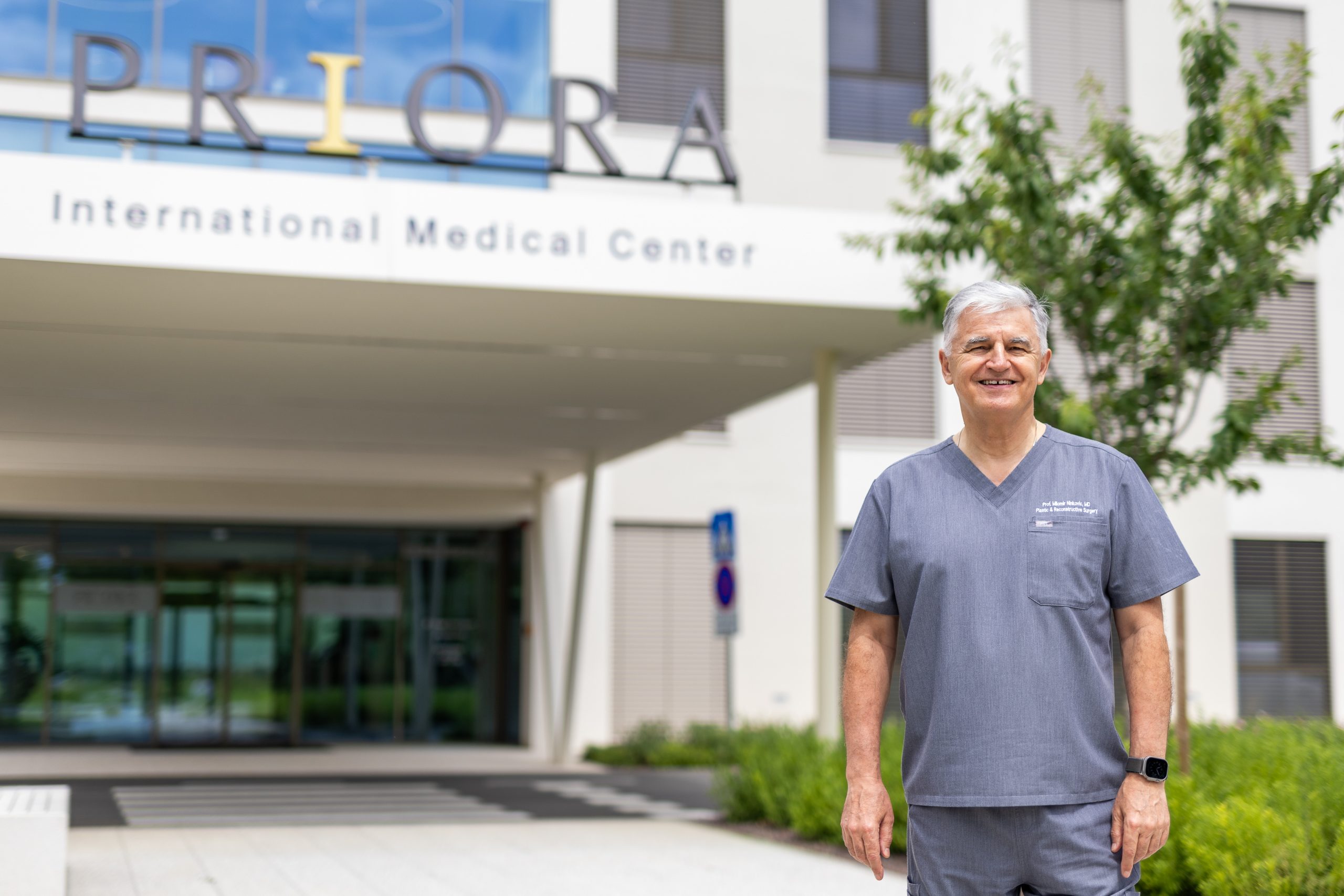
“These are microvascular bone graft procedures, involving the transfer of small pieces of bone from the knee to the wrist. The bone fragments measure approximately 1 to 1.5 centimetres and have their own blood supply. The blood vessels themselves are approximately 0.5 millimetres in diameter. My work is particularly focused on these tiny blood vessels – their precise positioning and connection. They can be joined under an operating microscope, restoring circulation and bringing the bone graft back to life,” explains Dr Heinz Buerger, who recently visited Priora.
In this way, the graft receives its own blood supply, enabling better and faster healing of the scaphoid and lunate bones.
“Most of these patients are young, usually between 20 and 25 years old. If non-healing fractures of the small bones of the hand and wrist are not treated with an appropriate surgical procedure, they can lead to severe wrist arthritis. Within five to ten years, significant degeneration of the joint can develop, and in advanced cases the patient may completely lose wrist function,” says Dr Buerger.
Twenty-seven-year-old A. S. from Sarajevo knows very well what it is like to live with a scaphoid fracture and scaphoid nonunion.
“The injury happened when I fell onto my hand, specifically my palm, during a football match. The problem has been present for more than seven years, ever since the fracture occurred. It significantly limited me in sports and prevented me from doing exercises involving the arms, such as push-ups and gym exercises. I also experienced pain during certain movements in everyday life,” says the 27-year-old.
After trying various conservative treatments without success, he ultimately decided to undergo surgery.
Patients typically seek medical attention because of significant wrist pain, but many hospitals do not have the capability to perform such a complex microsurgical procedure.
Vascularised Bone Graft with a High Healing Rate
“The learning process for this technique is relatively long, and extensive experience is required to achieve optimal results. The method was first described by a Japanese surgeon in 2000. Over the years, I continued to develop it, and I have been using my own modified and specific technique since 2006,” Dr Buerger explains.
The prognosis following surgery is very good. According to Dr Buerger, the healing rate ranges from 90 to 94 percent.
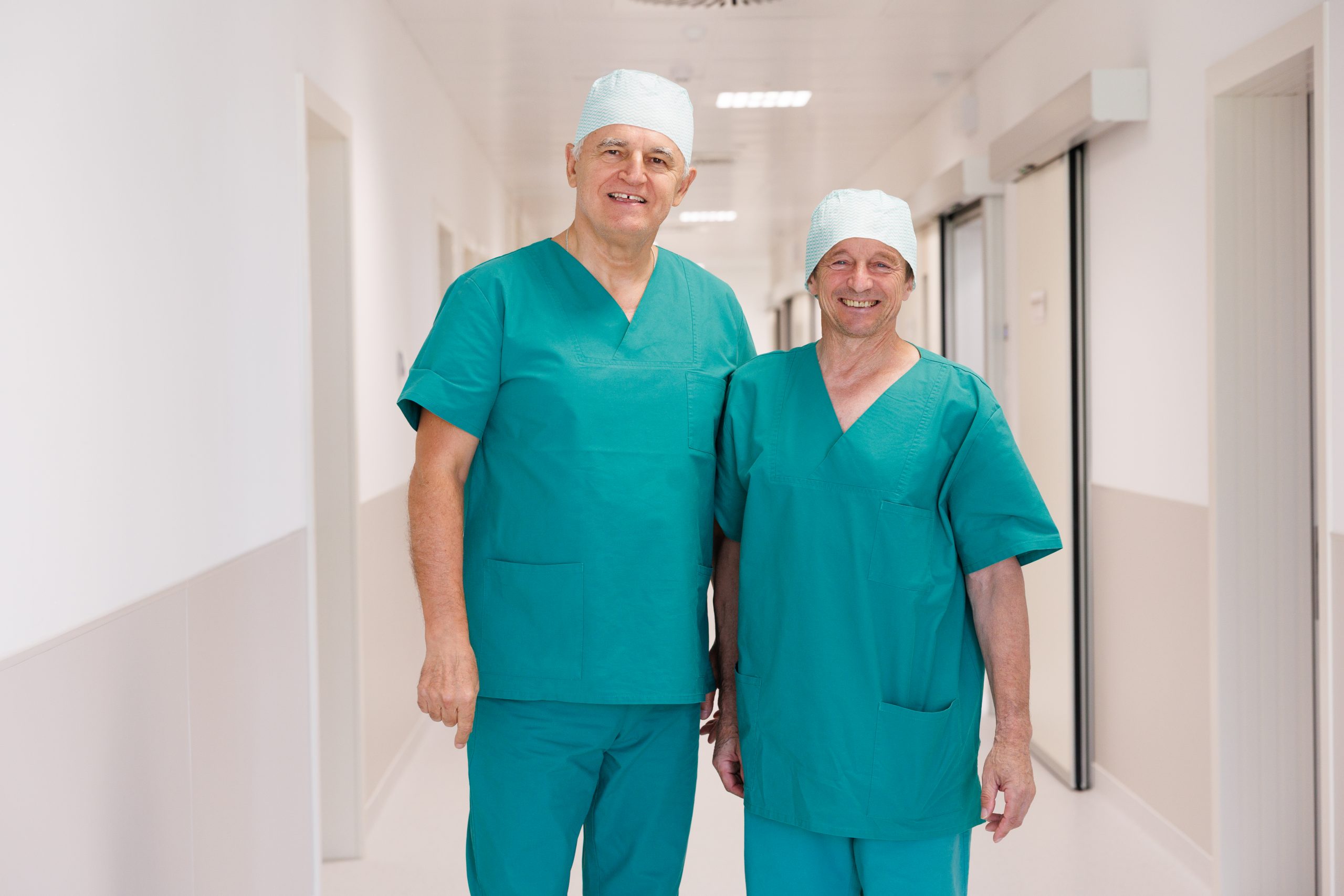
Prof. Milomir Ninković, MD, PhD, is also a highly experienced surgeon and recognised authority in microsurgery and hand surgery. Their collaboration therefore brings together a significant combination of expertise and experience.
“There are eight small bones in the wrist that are extremely important for its mobility, and two are most commonly affected by fractures – the scaphoid and the lunate. If they fail to heal and begin to deteriorate, the entire wrist joint can eventually be affected, leading to loss of mobility and, ultimately, the need for joint fusion. These injuries are most common in young people, and losing wrist mobility in your twenties is a devastating outcome,” says Prof. Milomir Ninković, MD, PhD, Head of the Department of Plastic, Reconstructive, Aesthetic and Hand Surgery at Priora International Medical Center.
He adds that these injuries often occur after a fall onto an outstretched hand, for example during martial arts or a motorcycle accident.
“In most cases, the bones can heal normally. However, because of their anatomically limited blood supply, healing does not occur in some patients. This results in a nonunion, or so-called false joint, while the bone begins to deteriorate due to insufficient blood supply. Eventually, the entire wrist joint can be affected. It is a very complex problem, and I believe there are hundreds of young people in our region who are unable to find an adequate solution. It is estimated that almost one-third of these fractures do not heal normally. That is precisely why this method is so valuable. A vascularised bone graft brings a new, independent blood supply to the area of damaged bone, creating better conditions for healing and preserving wrist function,” Professor Ninković emphasises.
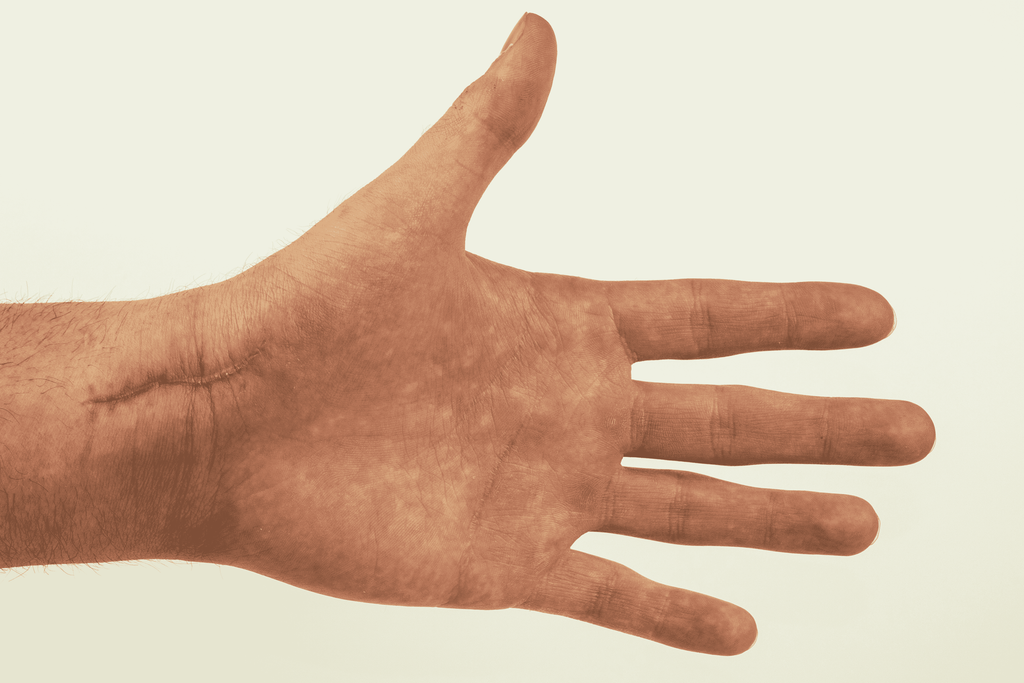
These are technically demanding operations because they involve extremely small anatomical structures, he adds. A high degree of precision is required both to preserve the function of the knee from which the graft is harvested and to achieve a successful result in the wrist.
“Dr Heinz Buerger is a world-renowned expert who has performed a large number of these procedures. His experience and professional support are extremely valuable to us as we continue to develop this method. Procedures of this kind have already been performed at Priora with his support, and our goal is to establish long-term collaboration so that this demanding surgical technique can become available to more patients with complex wrist conditions,” says Professor Ninković.
“The slogan of Priora International Medical Center is Excellence is our priority. We strive to achieve the highest level of excellence and precision in every operation. That is why we bring in world-renowned experts to support us, share their experience and help us achieve the best possible results,” concludes Prof. Milomir Ninković, MD, PhD.

