The first Da Vinci robotic surgeries in Croatia were performed at the International Medical Center Priora in Čepin in June 2024. Over the past two years, more than one hundred patients have successfully undergone procedures using this advanced robotic system. Da Vinci was first introduced for prostate surgery, followed by kidney procedures. At the beginning of this year, the first robotic gynecological surgeries in Croatia were also performed, including a hysterectomy.
Da Vinci is celebrating its second anniversary at Priora—and in Croatia.
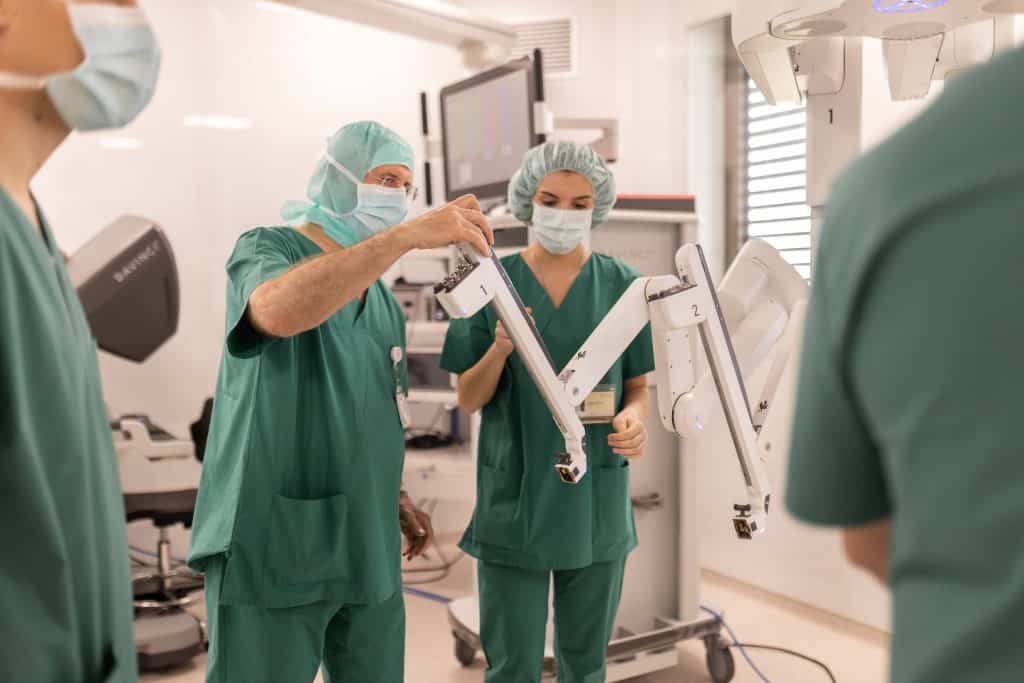
“The system enables minimally invasive procedures and allows surgeons to access narrow anatomical areas that are difficult to reach with conventional or laparoscopic surgery. With Da Vinci, the surgeon effectively has four ‘hands’ operating simultaneously. The robotic arms provide exceptional mobility, with a range of motion of up to 540 degrees and millimeter-level precision,” said Tomislav Kalem, M.D., M.Sc., Director of IMC Priora and Head of the Department of Urology, who performed the first Da Vinci procedures in Croatia.
Advantages of Da Vinci Robotic Surgery
Instead of large incisions, only 5-12 mm openings are required to insert the surgical instruments and camera. The entire procedure is viewed in real time via a high-definition, three-dimensional image, magnified up to 10 times, allowing surgeons to visualize even the smallest tissue structures and blood vessels clearly.
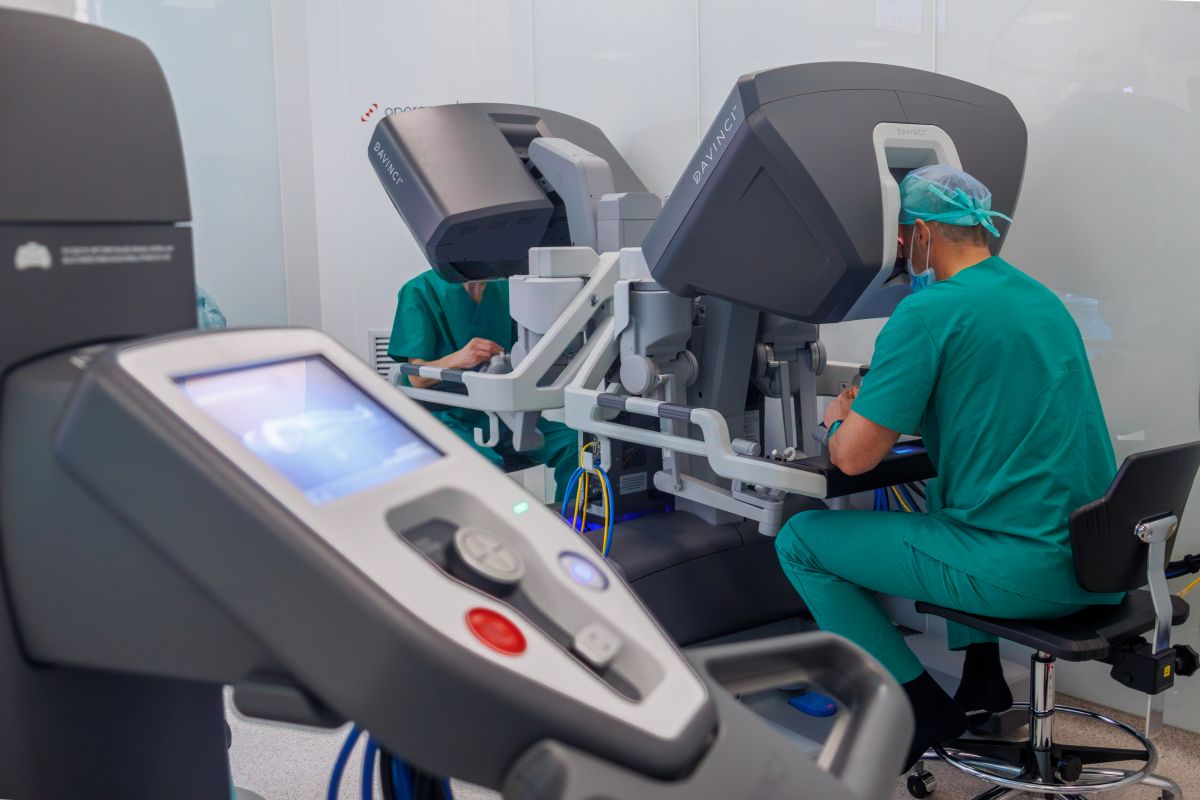
“This level of precision increases surgical safety, reduces blood loss, and the risk of complications. It also shortens the procedure itself, meaning patients spend less time under anesthesia, resulting in a faster and easier recovery,” explained Dimitrije Milojković, M.D., gynecologic oncologist and Head of the Department of Gynecology at IMC Priora.
The technological advantages of the Da Vinci system translate directly into patient benefits—smaller incisions, minimal blood loss, and significantly faster recovery compared with conventional surgery. In urological procedures, one of the greatest advantages is the preservation of urinary continence and sexual function.
“After the surgery, I didn’t feel any pain, and I was back to my daily activities, including work, within just ten days. I didn’t need radiation therapy, and I’m not taking any medication,” said Mirko Blažević from Vinkovci, one of the first urology patients to undergo Da Vinci surgery.
“Da Vinci gave me my confidence back—it gave me my quality of life back. I had only tiny incisions, no pain afterward, no bleeding, and I recovered remarkably well,” recalled Slobodan Marković from Belgrade.
Da Vinci Continues to Expand at Priora
Ivana from Vukovar was among the first gynecological patients in Croatia to undergo surgery using the Da Vinci system: “After two previous conventional surgeries for endometriosis, my recovery was long. After my Da Vinci procedure, I was on my feet the very same evening, feeling well and without pain.”
The possibilities of the Da Vinci system continue to grow, and Priora is now expanding its application to abdominal surgery, making it the third surgical specialty to benefit from robotic-assisted procedures.

