Nikolina Škara has been living with migraines since she was 17 years old. During severe attacks, she loses her vision and is literally unable to get out of bed. Neither medications nor alternative therapies brought relief until she learned about a surgical procedure that ultimately led her to a plastic surgeon.
When a migraine attack begins, there is nothing I can do except lock myself in a dark room and spend the rest of the day lying down because I am no longer capable of carrying out any daily activities. The fear that another migraine will strike is always somewhere in the back of my mind and is impossible to describe. I constantly question how my body feels and whether I can prepare for a new attack. Over time, I learned to recognize the symptoms even a day in advance – for example, my neck becomes stiff, I yawn for half the day, and I wake up exhausted despite having slept for eight hours. Some symptoms are things you would never associate with a headache because, unfortunately, very little is said about migraines. As a result, you can spend years questioning yourself before finding a way to recognize the warning signs before an attack begins, says 39-year-old Nikolina Škara from Zagreb.
Twenty-Two Years of Living with Migraines
Nikolina has suffered from migraines since the age of 17. After more than two decades of battling severe headaches, hope for a better quality of life free from debilitating pain came from an unexpected source – a plastic surgeon, through a nerve decompression surgery. However, the road to that solution was long.
My migraines begin with an aura, which means I see flashing zigzag lines in front of my eyes, like lightning bolts. Very quickly, they spread across my entire field of vision, leaving me almost completely blind for 15 to 20 minutes. At the same time, I feel as though I am outside my own body, leaving me completely unable to move. Once my vision returns to normal, a severe, disabling headache follows, accompanied by nausea and extreme sensitivity to smells and sounds – she explains.

Although she has lived with migraines for 22 years, her most intense struggle began on September 21, 2024, when she experienced a headache that she describes as “a 50 on a pain scale from 1 to 10.”
The pain was so intense that I felt like banging my head against the wall. Since that day, my headache has never completely disappeared, even though all my medical tests have come back normal. For the past two years, I have been unable to work or carry out everyday activities most of the time. Some days I cannot get out of bed, while on better days I manage to accomplish at least a few things – she says.
Previously, she adds, she did not really treat her migraines but tried to “put out the fire” by taking painkillers, going to bed, and “praying not to wake up with a migraine the next day.”
From Botox to Surgery
Sometimes the attacks lasted two days; sometimes they passed within the same day. Unfortunately, until recently, I had never met a doctor who could help me understand where my migraines were coming from or how to manage them. Over the past two years, I saw seven neurologists, was treated in a hospital, and tried almost every medication available on the market for pain relief, but nothing worked. When it became clear that no one could find a solution, I was even referred to a psychiatrist because doctors did not know what else to do with me. That was when I turned to alternative medicine, including acupuncture, hypnosis, bioenergy treatments, spinal alignment, and laser acupuncture. My overall condition improved, and, with pain medication, I had more energy to get out of bed and carry out daily activities. However, the headache remained, only at a pain level between 5 and 8, which felt like a small victory to me – Nikolina recalls.
She later learned about Botox therapy by chance.
Since I had already tried so many things without significant improvement, I decided I would try anything that might help me get rid of the pain. I underwent Botox treatment twice because its effects wear off after several months. It helped considerably, but the pain did not disappear. During those treatments, however, I heard for the first time about nerve decompression surgery for headaches, and that opened up a completely new path for me – she says.
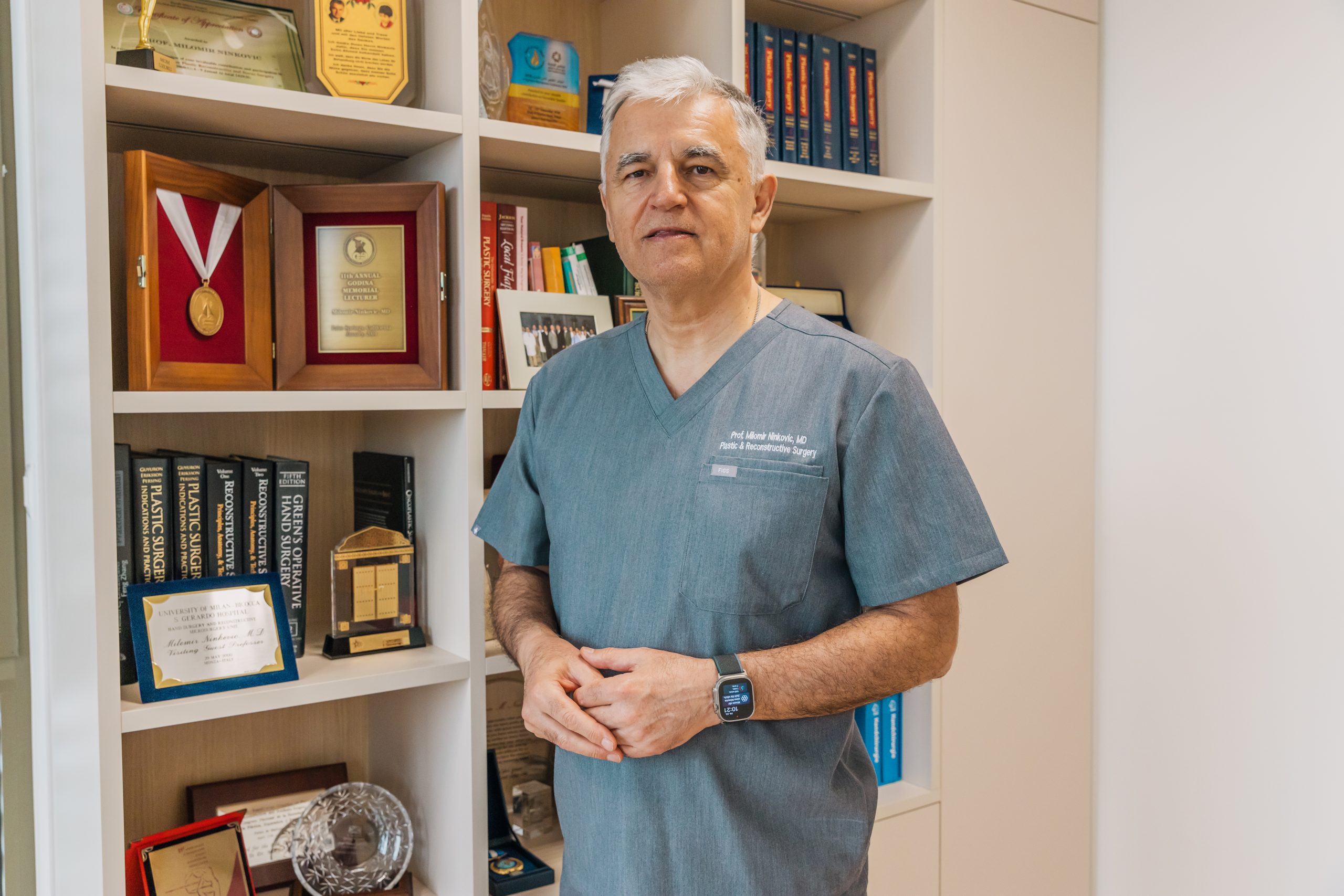
A friend then recommended that she consult Professor Milomir Ninković, MD, PhD, a plastic surgeon at IMC Priora in Čepin.
Nerve Decompression – When Surgery Can Help Migraine Patients
Surgical treatment of migraines is an approach used for certain forms of chronic migraine in patients for whom conservative methods – medication, botulinum toxin, and lifestyle modifications – have not produced satisfactory results. In some patients, migraines may be triggered by irritation or compression of peripheral nerves in so-called “trigger zones.” The goal of surgery is to relieve pressure on these nerves caused by surrounding structures, explains Professor Ninković.
According to him, careful patient selection and an individualized approach are essential.
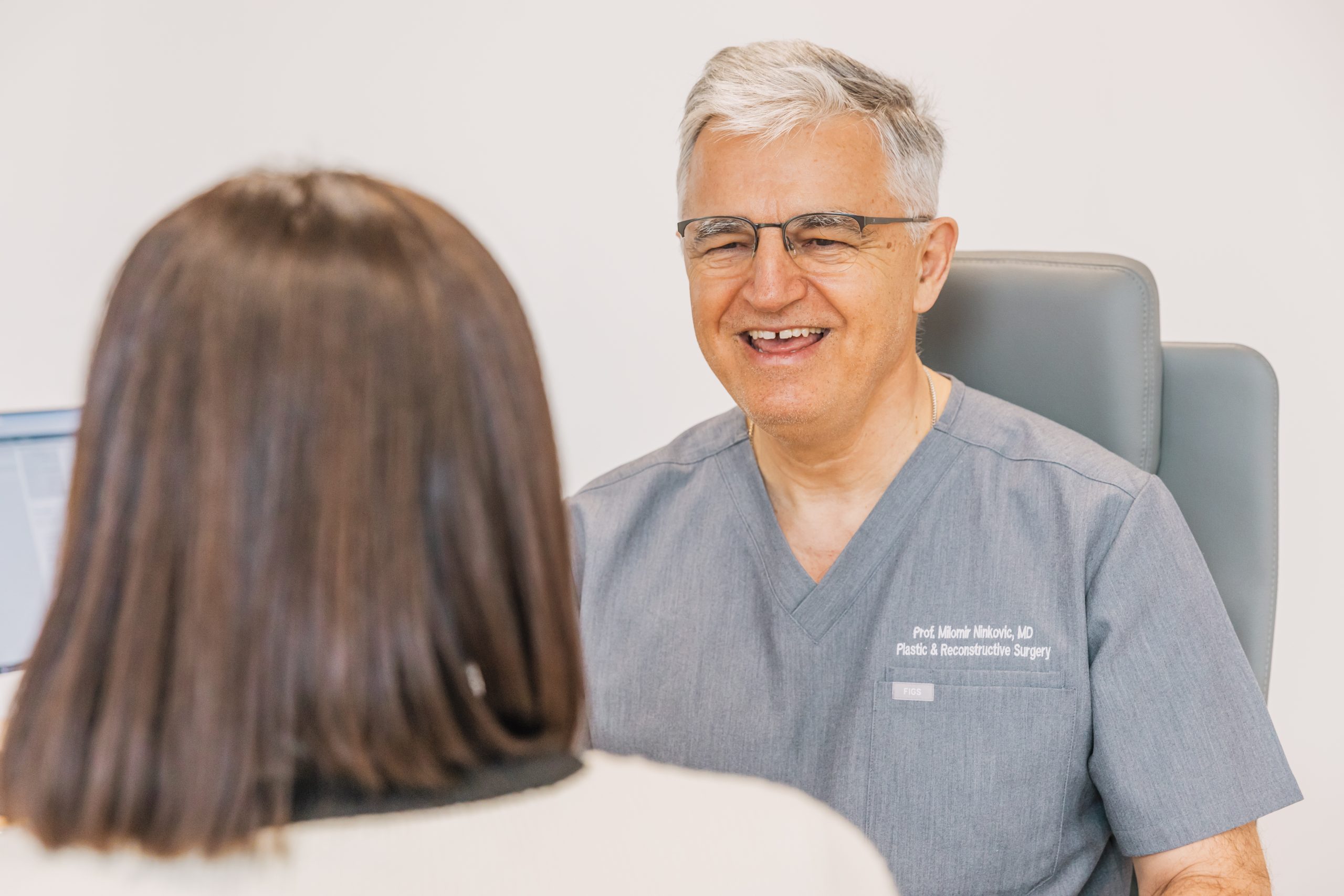
Before surgery, patients undergo a detailed neurological evaluation and a comprehensive medical history assessment. Identifying trigger zones before surgery is crucial and is typically performed using botulinum toxin or local anesthetic testing. If the patient responds positively, surgical treatment may be considered, he explains.
According to published studies on these procedures, between 50 and 90 percent of patients experience a significant reduction in the frequency and intensity of migraine attacks.
In my experience, the best outcomes are achieved in carefully selected patients, where symptoms may even disappear completely. These procedures can be performed under local or general anesthesia, and complications are rare and generally minimal, says Professor Ninković.
Migraine Is a Serious Neurological Disease
Professor Ninković also explains how Botox works in migraine treatment, a therapy that Nikolina had previously tried.
Botox was initially used primarily for aesthetic purposes, but it was later observed that patients suffering from migraines experienced fewer attacks and reduced pain intensity. There is also a theory that Botox decreases the release of substances involved in pain transmission, thereby further reducing migraine frequency, he explains.
Nikolina Škara points out that migraines receive very little attention in Croatia, “let alone migraines as a neurological disease.”
Migraines are a serious neurological condition, and living with them is extremely difficult. When a migraine strikes, the pain can be completely disabling, leaving you unable to work or live a normal life. To everyone going through the same struggle, I would say that solutions do exist and that they should never give up searching for help. More and more treatment options for migraines are becoming available in Croatia today, concludes Nikolina.

