Melanoma is the most serious malignant tumor of the skin. It most commonly occurs in adults and is very rare in children and adolescents. The incidence in Western Europe is 19 cases (men and women) per 100,000 people, followed by North America (18 men and 14 women per 100,000) and Northern Europe (17 men and 18 women per 100,000). Individuals with lower socioeconomic status, who likely have reduced access to early detection services, show the greatest increase in melanoma incidence compared to those with higher socioeconomic status.
Risk Factors for Melanoma
Numerous studies strongly confirm that exposure to UV (ultraviolet) radiation is the main risk factor for the development of melanoma. Large studies examining sun exposure, sunburns, and melanoma incidence have shown that occasional intense sun exposure, especially during childhood and adolescence, significantly increases the risk of melanoma, while regular moderate exposure does not have the same effect.
For example, annual seaside vacations or occasional mountain hiking may represent this type of exposure. Regarding UV radiation, UVB radiation (wavelengths from 290 to 320 nm) is associated with a higher risk of melanoma development than UVA radiation (320 to 400 nm). This is supported by the higher incidence of melanoma in regions near the equator, where UVB radiation is strongest. Additional risk factors include frequent or early use of tanning beds, long-term effects of PUVA therapy, genetic predisposition, the presence of dysplastic nevi (atypical moles), intense sun exposure, and sensitive skin types. Additional risks may include alcohol consumption, as well as certain medical conditions such as Parkinson’s disease, endometriosis, prostate cancer, and the use of immunosuppressive therapy.
What Does the Examination Look Like?
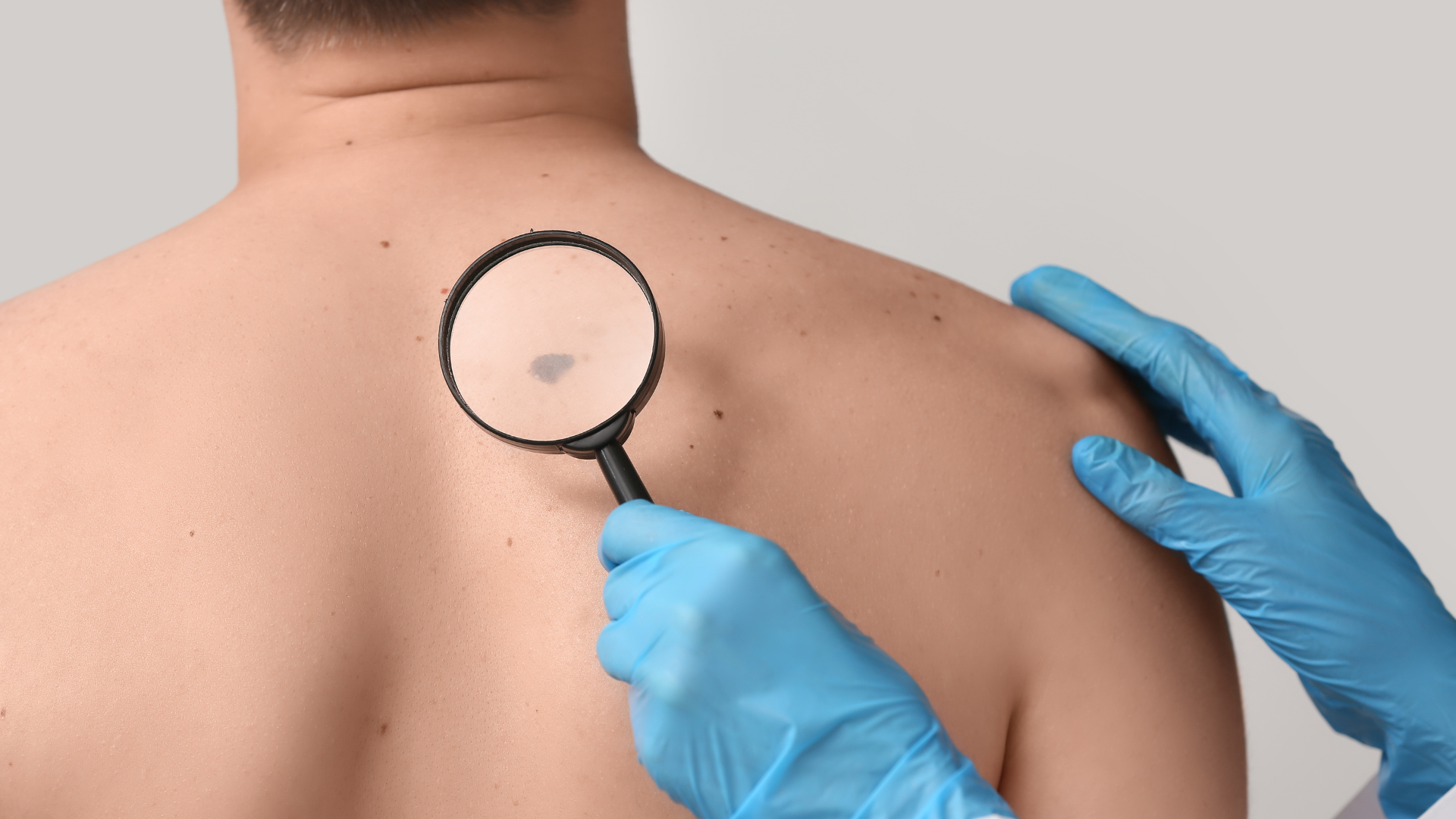
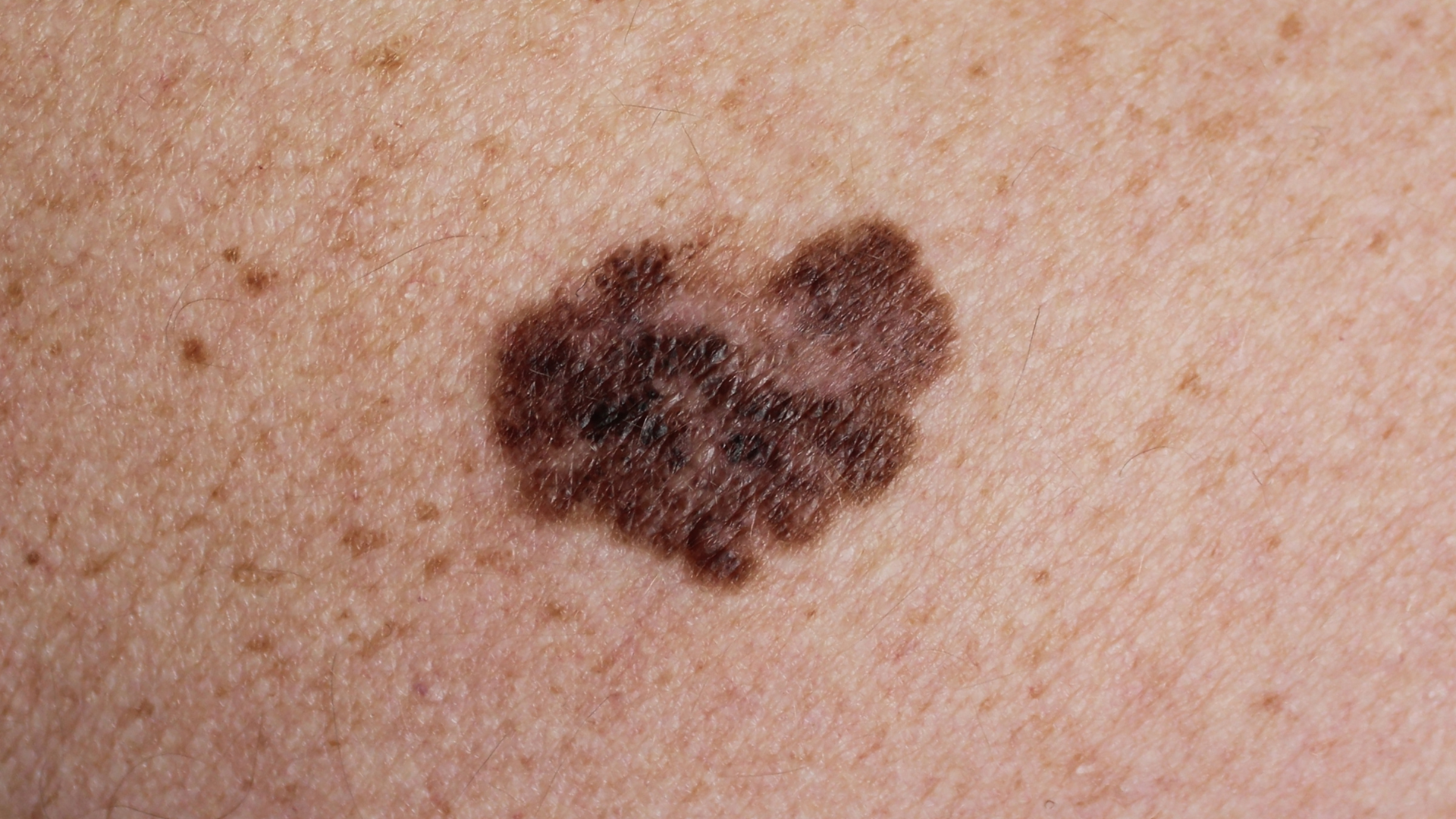
The physician examines moles using a dermatoscope, paying special attention to those that differ from others, the so-called “ugly duckling” sign. The ABCDE criteria are also used, which include asymmetry, irregular borders, varied color, diameter greater than 6 mm, and evolution (changes in size, shape, color, or the appearance of new lesions). Additionally, the revised seven-point checklist may be applied. Major criteria include changes in size, shape, or color, while minor criteria include larger diameter, inflammation, bleeding, or itching. A combination of one major and one minor criterion, or three minor criteria, is an indication that the mole should be removed.
Suspicious Lesion – What Next?
When a suspicious lesion is identified, an excisional or complete biopsy (surgical removal) is usually performed. This involves removing the entire lesion with a margin of 1 to 3 mm of healthy skin and extending to the deepest part of the mole. First, the skin around the mole is cleaned and numbed (local anesthesia) to prevent pain. The mole is then carefully removed with a scalpel, along with a small portion of surrounding healthy tissue.
The wound is closed with sutures or covered with a dressing. After the procedure, the wound is regularly cleaned until it heals, and sutures are removed according to the physician’s instructions.
A key step after the procedure is the pathohistological (PH) analysis, which confirms or rules out melanoma. If melanoma is confirmed, a wider excision of the surrounding skin is often required.
At the International Medical Center Priora, our surgical team ensures that suspicious moles are removed safely and in a timely manner.
Skin Cancer Prevention
The best way to protect your skin is to limit sun exposure, especially between 10 a.m. and 5 p.m. If sun exposure cannot be avoided, wear protective clothing, a hat, sunglasses, and use sunscreen with at least SPF 15, and SPF 50+ for children. Apply sunscreen to all exposed skin, including ears, lips, neck, and feet, and reapply approximately every two hours, especially after swimming or sweating.

