The Da Vinci Xi robotic system has introduced a completely new dimension to minimally invasive surgery, becoming a synonym for precision, safety, and faster patient recovery. While its success has been most evident in Urology, Urologic Oncology, and Robotic Surgery and prostate cancer treatment, its potential applications extend much further, including the field of gynecology.
Robotic surgery in gynecology as a new era of minimally invasive procedures
For complex gynecological surgeries, doctors have traditionally performed abdominal incisions, often resulting in greater blood loss, a higher risk of infection, adhesions, increased postoperative pain, and longer recovery times. Laparoscopic procedures offer a less invasive option; however, their effectiveness is limited by technical factors, such as 2D imaging and restricted instrument mobility.
This is where the sophisticated Da Vinci system comes into play. Its robotic arms offer exceptional mobility with a range of motion up to 540 degrees and millimeter-level precision. Moreover, its 3D high-definition view with up to 10x magnification provides surgeons with superior clarity and safety during the procedure.
For patients, the results include minimal scarring, reduced blood loss, less pain, and significantly faster Recovery. This method is especially suitable for patients with elevated risk factors such as cardiovascular disease, diabetes, obesity, or prior abdominal surgeries.
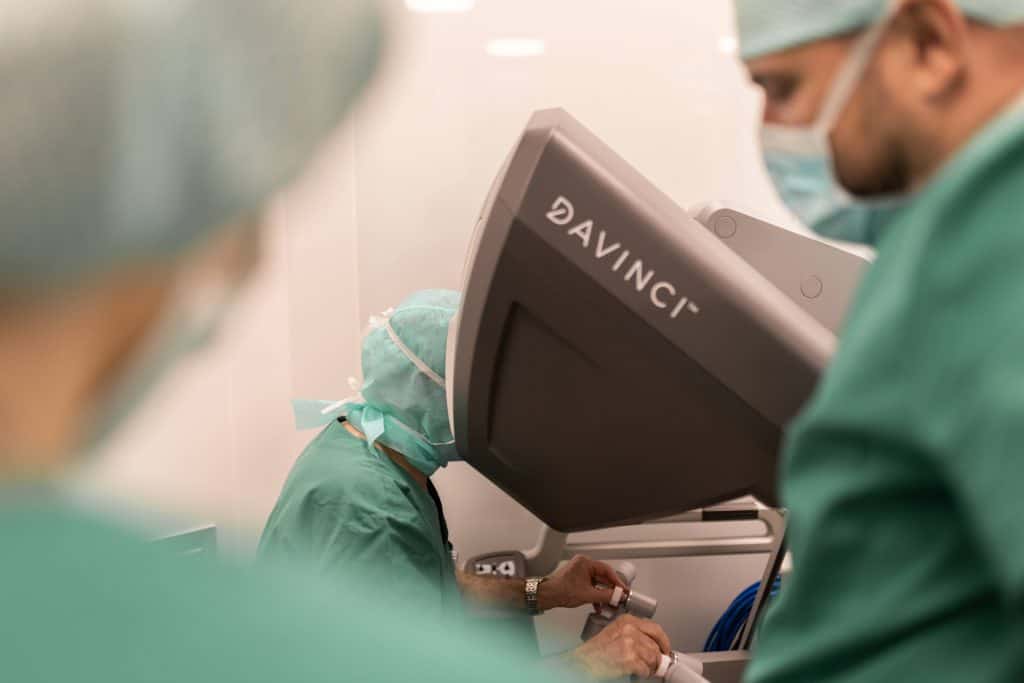
When is robotic surgery used in gynecology?
Robotic gynecological surgery is commonly used for:
– Removal of fibroids with uterine reconstruction
– Minimally invasive hysterectomy (with or without cervical removal)
– Treatment of uterine or vaginal prolapse
– Endometriosis surgery
– Treatment of malignant changes in the uterus, including lymph node removal
– Cervical cancer surgery – extended hysterectomy with lymphadenectomy
Key benefits of robotic surgery in gynecology
In addition to the above, the Da Vinci robotic approach offers:
– Reduced risk of infection
– Fewer postoperative adhesions
– Faster wound healing
– Better cosmetic results
– Shorter hospital stay
– Quicker return to daily activities