World Cancer Day is observed on 4 February, highlighting the importance of prevention, early detection, and timely, high-quality treatment.
World Cancer Day is observed on February 4th to raise awareness of the importance of prevention, early detection, and modern treatment of malignant diseases. Regular preventive check-ups, timely diagnostics, and the use of advanced medical technologies significantly improve treatment outcomes and patients’ quality of life. In line with this, IMC Priora offers a range of diagnostic and therapeutic services focused on the prevention and treatment of the most common cancers.
Da Vinci and prostate cancer
According to data from the Croatian Institute of Public Health, 862 men in Croatia died from prostate cancer in 2024, making it the third leading cause of cancer-related death among men. Each year, around 2,600 people are diagnosed with this malignant disease, making it the most frequently newly diagnosed cancer in men in Croatia.
The Da Vinci robotic system has revolutionized prostate cancer treatment, and the first Da Vinci procedures in Croatia were successfully performed at IMC Priora in June 2024.
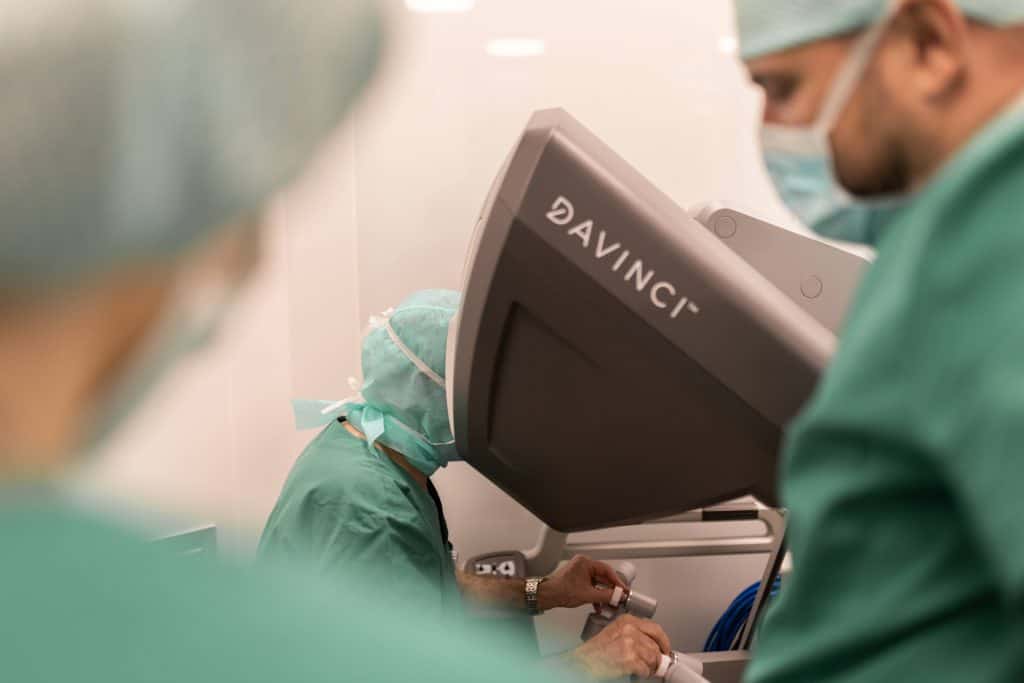
With Da Vinci, the surgeon effectively has four “hands” operating simultaneously. The robotic arms have exceptional mobility, with a range of motion of up to 540 degrees and millimetre-level precision, surpassing the limitations of the human hand. The entire procedure is monitored in a three-dimensional view on a screen. Da Vinci can magnify the image up to ten times, allowing the surgeon to see and preserve even the finest nerves.
All major technical advantages of Da Vinci translate into clear benefits for patients, who become mobile very soon after the procedure. Rehabilitation is faster, enabling an earlier return to work and everyday activities. Patients experience less severe pain, and thanks to the sophistication and precision of the robotic system, continence and sexual function are more likely to be preserved.
Mona Lisa – a revolutionary prostate biopsy
A prostate biopsy is one of the most important steps in diagnosing prostate cancer. Once an uncomfortable and painful procedure, it has been completely transformed thanks to the Mona Lisa Dx Biobot robotic system. This fusion prostate biopsy is known for its outstanding precision in obtaining tissue samples and detecting malignant changes. The procedure is performed under anesthesia, so the patient does not feel pain.

The system combines MRI and ultrasound images. A radiologist marks potentially suspicious areas (lesions) on the previously recorded prostate MRI, which are then “merged” with real-time ultrasound images of the prostate. This enables precise targeting of suspicious lesions.
PSA
Prostate-specific antigen (PSA) is a protein produced by prostate cells. Its level is measured in the blood to assess prostate health, as elevated values may indicate various conditions, including inflammation, benign enlargement, or prostate cancer. The PSA test is used to support early detection and to monitor treatment effectiveness.
Pap test
Cervical cancer most commonly occurs in women between the ages of 30 and 50, although changes can begin much earlier. Each year, around 300 women in Croatia are diagnosed with cervical cancer, and approximately 120 lose their battle with the disease.

A Pap test is a simple and quick examination in which cells are collected from the cervix. The sample is then sent to a cytology laboratory, where it is analysed under a microscope. This helps detect changes early that may indicate precancerous or cancerous cervical changes.
According to recommendations, the Pap test is performed at age 20 and every 3 years if previous results were normal.
HPV test
Infection with human papillomavirus (HPV) is associated with an increased risk of developing cervical cancer, as well as other cancers such as vulvar and vaginal cancer in women, and anal cancer and genital warts in women and men. From infection with high-risk HPV types to the possible development of cervical cancer, it can take 10 to 15 years.

An HPV test detects the presence of HPV, which can cause cervical changes and lead to cancer. The test is performed by taking a cervical swab, similar to a Pap test, and is completely painless. More recently, it can often be done immediately from the same Pap test sample, or if needed, later from a previously collected Pap test sample.
It is recommended for women aged 30 to 64 and can be performed on its own or in combination with a Pap test. Regular testing enables early detection of cervical changes and helps prevent the development of cancer.
HPV vaccine
Vaccination protects against HPV infection and its consequences and is also available at IMC Priora. The vaccine protects against the most common HPV types responsible for cervical cancer and other malignant diseases. Vaccination significantly reduces the risk of HPV infection and is recommended as an effective preventive measure, especially before becoming sexually active, but also later in life.

