Thanks to modern technology, the IMC Priora laboratory can analyze blood for as many as 295 allergens, as well as for antibodies to 287 food items.
Emmental, Gouda or Camembert cheese, egg, cod, hake, potato, beef, chicken, even ostrich meat, lentils, watermelon, kiwi, oregano… Whether we are intolerant to certain foods can be discovered very easily and quickly, with just “a few drops” of blood. This information can significantly impact our quality of life.
FOX2 – Food intolerance test
The answers are provided by FOX2, an advanced food intolerance test that analyzes IgG antibodies to 287 different food items. It differs from classic allergy tests because it does not measure IgE antibodies, which are responsible for immediate allergic reactions, but instead analyzes IgG responses associated with delayed immune reactions. This means that the test can detect food intolerance that may not be immediately obvious but can have long-term health consequences, including inflammation, digestive issues and reduced energy levels.

Medical laboratory diagnostics are key not only to successful treatment, but also to the prevention of a number of diseases. At the International Medical Center Priora, a particularly important role is therefore given to the modern laboratory equipped with state-of-the-art technology, offering laboratory diagnostics in line with high standards. They can also take pride in precise testing for a considerable number of allergens, along with a wide range of other important tests, including, among others, hormonal and tumor markers, as well as a highly sensitive test for the detection of blood in stool and more.
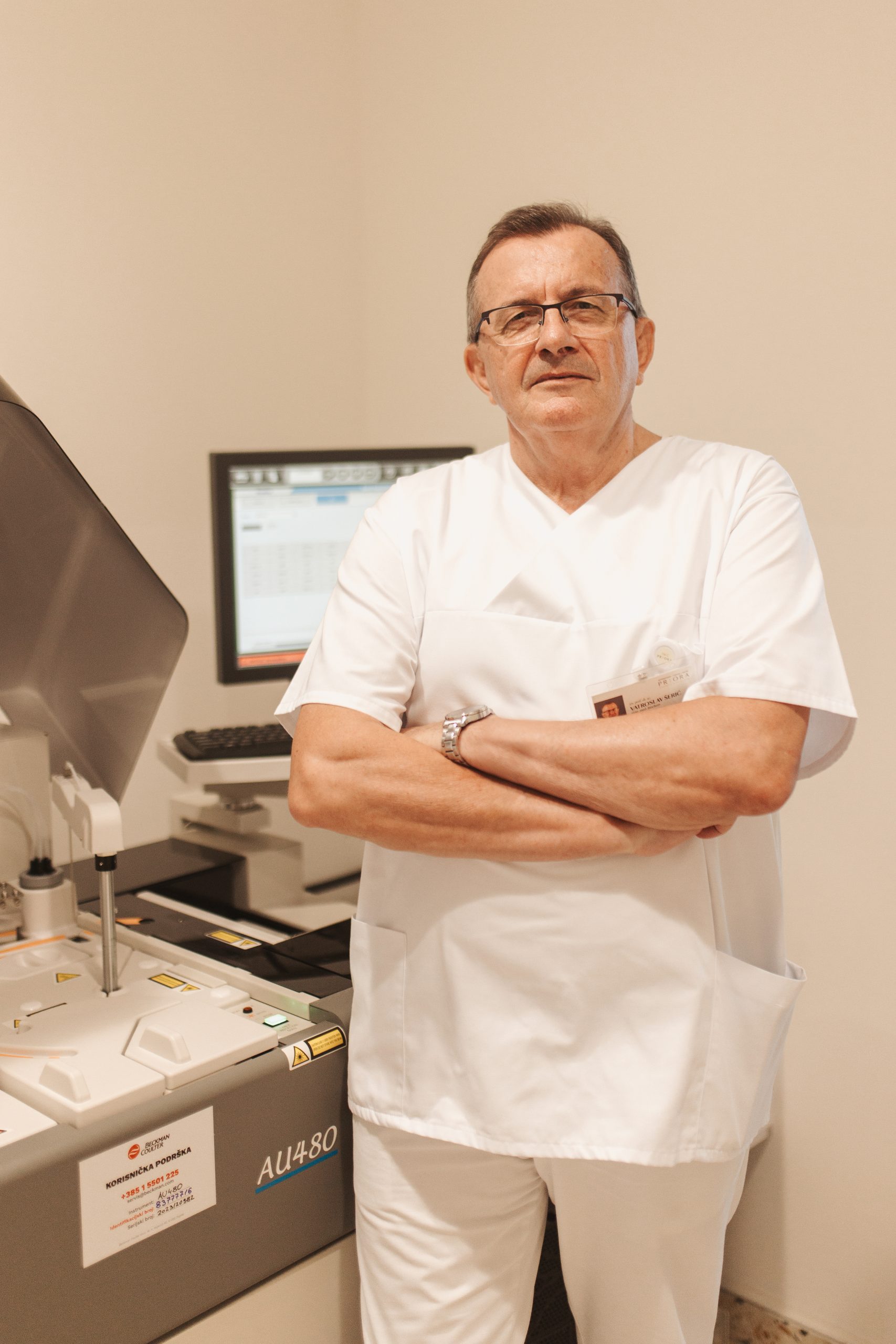
“The food intolerance test can reveal, for example, whether our immune system reacts with inflammation to a particular protein, such as egg, causing our body to suffer the consequences. We may feel tired, drained of energy or unrested, simply because we have eaten or drunk something that does not agree with us and has triggered certain changes in our body. Likewise, if we avoid the foods that bring us into such an unpleasant state, we will quite literally feel reborn. Patients are often genuinely surprised when they realize that common foods such as eggs or milk have been causing such troublesome symptoms,” explains Assoc. Prof. Vatroslav Šerić, PhD, MSc. biochem., specialist in medical biochemistry and head of the IMC Priora laboratory.
ALEX2 – Advanced allergy test
An increasing number of patients, especially children and young people, come to Priora because of food intolerance or allergies. When it comes to allergies, they have access to ALEX2, an advanced allergy test that uses molecular diagnostics to analyze the presence of IgE antibodies to more than 295 specific allergens. Unlike conventional allergy tests, which usually detect only basic allergic reactions, the ALEX2 test allows for detailed analysis and differentiation of primary allergies from cross-reactions. It is one of the broadest panels available for allergy detection.

“The rising incidence of allergies, especially in children, is also a consequence of modern lifestyles – from the very beginning, children are not exposed to allergens and are kept under a ‘glass dome’, which leads to various immune disorders resulting in hypersensitivity. In addition, the food we eat today differs greatly from what previous generations grew up on. Likewise, due to uncultivated land, plants such as ragweed are spreading, triggering strong allergic reactions that impair quality of life. Allergies can even be life-threatening, depending on an individual’s immune constitution,” emphasizes Professor Šerić.
Through modern medical laboratory diagnostics, they identify problems and provide answers that form the basis for physicians in their further approach and treatment.
Prof. Šerić: Patients go straight from the clinic to the laboratory
“Our advantage is that we can respond promptly to all requests, thanks to the top-quality equipment and resources at our disposal. Priora has the privilege that a patient from any of its clinics can go directly to the laboratory, have their blood drawn, and within an hour or two receive a panel of results for which one would usually wait two to three weeks, or even longer, in hospitals,” our interlocutor continues.
For allergy and food intolerance testing, only 200 microlitres of blood are needed, that is, one fifth of a millilitre, which is truly a minimal amount. For children, blood can also be taken capillary, to make the experience as comfortable as possible.
“We are constantly identifying areas that are not yet covered and strive, through our work and advanced technology, to respond as promptly as possible to the challenges our patients present to us. Analysis of the chemical composition of kidney stones using FTIR-ATR spectroscopy is available to patients from all over Croatia and abroad, without the need to visit the facility in person. Likewise, for the purpose of treating obesity, our diagnostic program includes more than 50 parameters, which help determine, for example, whether carbohydrate metabolism is impaired, while with the help of the Lp(a) marker, which refers to lipoprotein (a), we can establish whether there is an increased risk of stroke or heart attack. In addition, we offer advanced lipoprotein analysis, including the determination of small LDL cholesterol (sdLDL-C), which is a better indicator of atherogenicity than total LDL cholesterol, the determination of non-HDL cholesterol (non-HDL-C), apolipoprotein B (apoB), homocysteine and hsCRP-card. In other words, we provide modern and very detailed laboratory diagnostics,” concludes Dr. Šerić.
IMC Priora continuously participates in international external quality assessment programs, in which their laboratory results are compared with those from thousands of laboratories worldwide – and are consistently at a high level.

