During Colorectal Cancer Awareness Month, Dr. Matej Plažanin, a gastroenterologist at IMC Priora, explains how to prevent this disease and, if it occurs, how to detect it in time.
Every day, 11 people are diagnosed with colorectal cancer, and sadly, six of them die from the disease. These are figures that the gastroenterology community emphasizes during March – Colorectal Cancer Awareness Month. In Croatia, this disease causes around 2,000 deaths annually.
How to prevent colorectal cancer and how to detect it early if it occurs are explained by Dr. Matej Plažanin, a gastroenterologist at the International Medical Center Priora.
What are the most important risk factors for colorectal cancer?
Risk factors include age over 50, positive family history, inherited syndromes such as familial adenomatous polyposis, the presence of adenomas (polyps), and inflammatory bowel diseases such as Crohn’s disease and ulcerative colitis.

People who have already had colorectal cancer or have undergone chemotherapy and abdominal radiation for another type of cancer are also at increased risk. Modifiable risk factors include a diet rich in red and processed meat, low fiber intake, obesity, physical inactivity, smoking, and alcohol consumption.
Are there “silent” risk factors we may not be aware of?
“Silent” risk factors include chronic inflammation, metabolic syndrome, and circadian rhythm disorders such as night shifts and poor sleep.
How can early symptoms be recognized?
The earliest signs include changes in bowel habits and the presence of blood in the stool, while laboratory findings may show reduced hemoglobin levels.
Although colorectal cancer most commonly affects people aged 50 and older, there is a growing trend of occurrence at a younger age.
In the past decade, colorectal cancer has increasingly been diagnosed in younger individuals. However, the majority of cases still occur in those over 50.

The shift toward younger age groups is largely attributed to diet—particularly ultra-processed foods, higher intake of red and processed meat, and low fiber consumption—which leads to changes in the gut microbiome and “low-grade” chronic inflammation. Frequent use of antibiotics, sedentary lifestyle, and obesity also contribute. Diet remains the most significant factor.
How significant is genetics? When should we be particularly concerned about family history?
Genetics plays a major role. If a first-degree relative has or had colorectal cancer, the risk is two to three times higher than in the general population. The risk increases the younger the relative was at diagnosis. For example, if a father developed colorectal cancer at an early age, the risk for his children can be up to five times higher. Studies show that the presence of colorectal cancer in first-degree relatives (parents, siblings) significantly increases risk.
If detected early, the disease is curable in more than 95% of cases. Why is this not enough to encourage regular screenings?
Colorectal cancer is highly treatable if detected early, and it can even be prevented by removing polyps, which are initially benign. However, fear and stigma associated with colonoscopy remain major barriers to regular preventive screenings.
How can we reduce fear and stigma around colonoscopy?
Fear and stigma should be addressed through public awareness campaigns and by promoting colonoscopy under sedation as a safe and painless preventive method.
When should we have our first colonoscopy?
The first colonoscopy is recommended at age 50, although in the United States, it is often recommended from age 45. Preventive colonoscopies should be performed every 5 to 10 years, or more frequently if polyps are detected and removed.
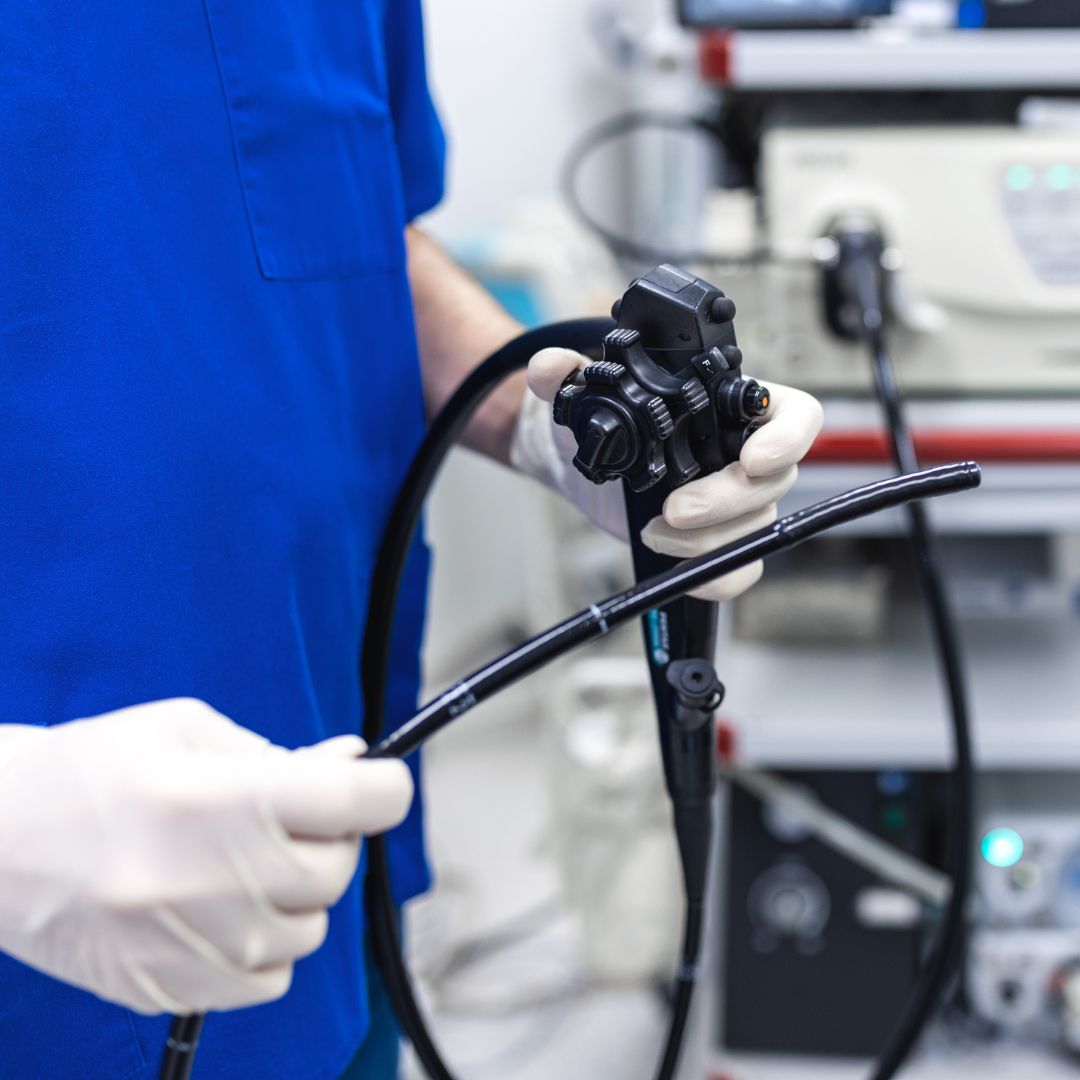
If there is a family history of colorectal cancer, the first colonoscopy should be done at age 40, or 10 years earlier than the age at which the relative was diagnosed. For example, if a father was diagnosed at 43, his children should have their first colonoscopy at 33.
What is the role of fecal occult blood testing?
If a person undergoes regular colonoscopies, this test is generally not necessary. However, for those who refuse a colonoscopy, it is useful to perform it annually. A positive result requires a colonoscopy. It is important to note that colonoscopy is the gold standard in colorectal cancer prevention, and a negative fecal occult blood test does not rule out polyps or even cancer.
How has treatment progressed today?
Treatment of colorectal cancer has significantly advanced with the development of new medications and treatment approaches, including neoadjuvant therapy. Today, a diagnosis of colorectal cancer does not mean the disease is incurable.
What is the quality of life after treatment?
After treatment, patients generally have a good quality of life, including those living with a stoma.

