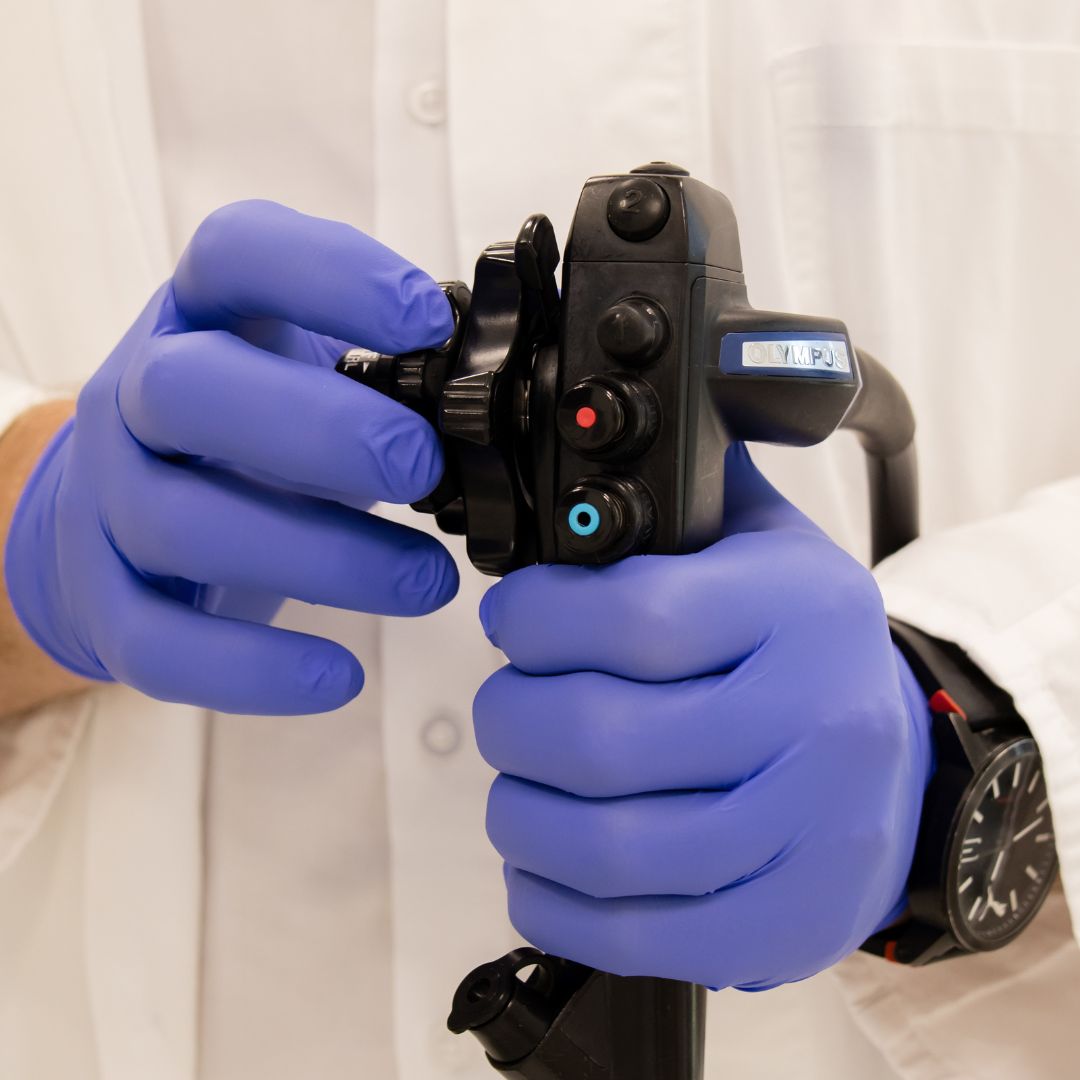
Colonoscopy is a diagnostic examination used to inspect the lining of the large intestine and, if necessary, the final part of the small intestine, the so-called ileum. During the examination, tissue samples can be taken, and polyps—mucosal protrusions—are very often removed. Sometimes, blood vessel changes that tend to bleed can also be treated, most commonly using a laser. A gastroenterologist performs the examination. Unlike gastroscopy, colonoscopy requires preparation because the bowel must be completely emptied. You can read more about preparation below.
When is a colonoscopy performed?
A colonoscopy is recommended when there is suspicion of diseases of the lower digestive tract, primarily the large intestine. Such conditions may be suggested by long-lasting diarrhea of unclear origin, persistent constipation, blood in the stool, weight loss, or pain without a clear cause. Colonoscopy is also performed as a screening test for early detection of colorectal cancer.
In this group, symptoms are often absent, but the examination is extremely important. The age threshold for first screening is being lowered, so today it is most often recommended that everyone have their first colonoscopy at around age 45. In people with additional risk factors, the timing is determined in consultation with a gastroenterologist.
Colorectal cancer screening – colonoscopy for early detection
Cancer of the colon and rectum is the second most common cancer, both in incidence and in mortality, in both sexes. In Croatia, around three thousand people are diagnosed each year, and approximately two thousand lose their lives to this disease. That is why it is important to repeat: prevention is better than treatment. In addition to cancer, colonoscopy can detect other diseases: diverticulosis, inflammatory bowel diseases such as Crohn’s disease or ulcerative colitis, ischemic bowel disease, and others.
Colonoscopy in simple terms:
Preparation for colonoscopy
Preparation, i.e., bowel cleansing, is the most important prerequisite for a good colonoscopy. It consists of taking a solution that stimulates increased bowel movements. The first dose is usually taken in the afternoon, the day before the examination, and the second in the morning on the day of the procedure. It is important to take it early enough because frequent stools follow it, and taking it late could lead to waking up during the night.
Preparation can be done at home or in the hospital, depending on the patient’s mobility, age, and any chronic illnesses. Three days before the examination, avoid foods containing seeds and small grains, such as corn, tomatoes, grapes, and kiwi.
The day before the examination, a light breakfast and lunch are allowed, for example, rice, pasta, potatoes, or white bread. Dinner is skipped, as is breakfast on the day of the procedure. The first dose of bowel-cleansing solution should be taken around 4 p.m., with a large amount of fluids. The second dose is taken around 6 a.m., after which you must remain fasting. The examination is most often performed a few hours later.
If on the day of the procedure, you notice the stool is not clear, contact the department where the procedure will be performed. In agreement with the doctor, the appointment can be postponed because a colonoscopy in an inadequately cleansed bowel may be difficult, and important findings may be missed. Without good preparation, there is no quality examination.
Performing the colonoscopy
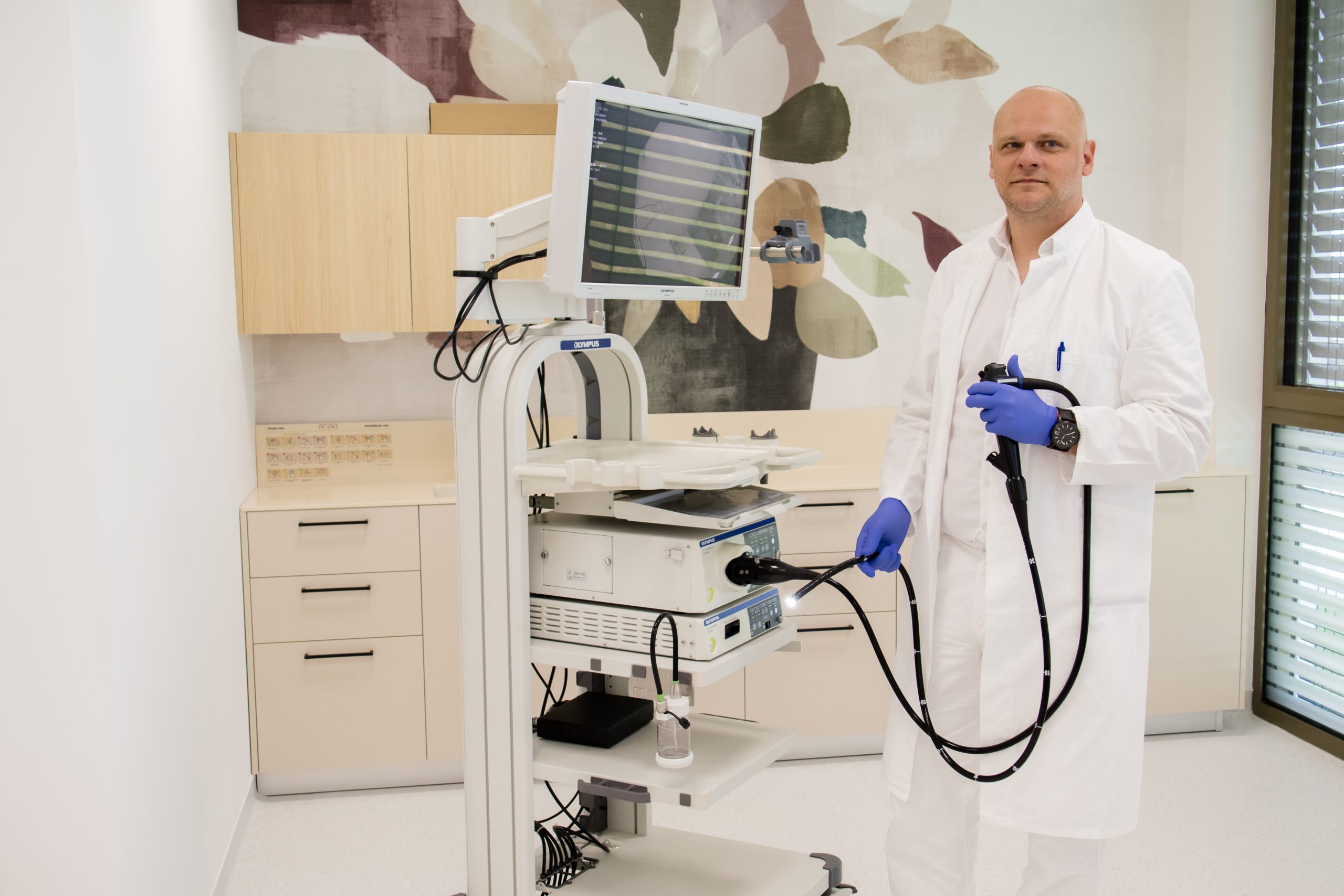
Colonoscopy can be performed with sedation or without it. General anesthesia requires the presence of an anesthesiologist, while milder forms of sedation can be done without one. During the procedure, you lie on your left side. The doctor inserts a thin, flexible instrument with a camera through the anal canal into the bowel. To improve visibility, air or a special gas is introduced into the bowel. If you are awake, transient discomfort or pressure may occur. The camera enables a detailed examination of the entire large intestine and the final part of the small intestine. Polyps are removed immediately and sent for analysis. If a lesion suggestive of a tumor is found, samples are taken. Bleeding blood vessel changes can be treated during the procedure itself, most commonly with a laser. If findings suggest inflammatory bowel disease, tissue samples are obtained to confirm the diagnosis, and further steps are determined based on what is observed.
Why is it important to remove polyps?
About 20% of colon tumors arise from polyps. The process from a benign adenoma to carcinoma takes years, most commonly 10 to 15 years, providing enough time to detect and remove them.
After the colonoscopy
After the procedure, patients most often go home the same day. In some cases, it may be necessary to stay in the hospital for observation, for example, if a larger polyp was removed and there is a possibility of bleeding. After returning home, the patient can eat normally, and recommendations depend on the findings. For example, after the removal of a larger polyp, a few days of rest are recommended. If signs of inflammatory bowel disease are found, therapy is often started immediately. If a suspicious finding is observed, the sample is sent for histopathological analysis, and further steps are determined once the results arrive.
Have your first colonoscopy at IMC Priora. Gastroenterology consultations, endoscopic examinations, and abdominal ultrasound are available at Priora under the supervision of Dr. Matej Plažanin.

